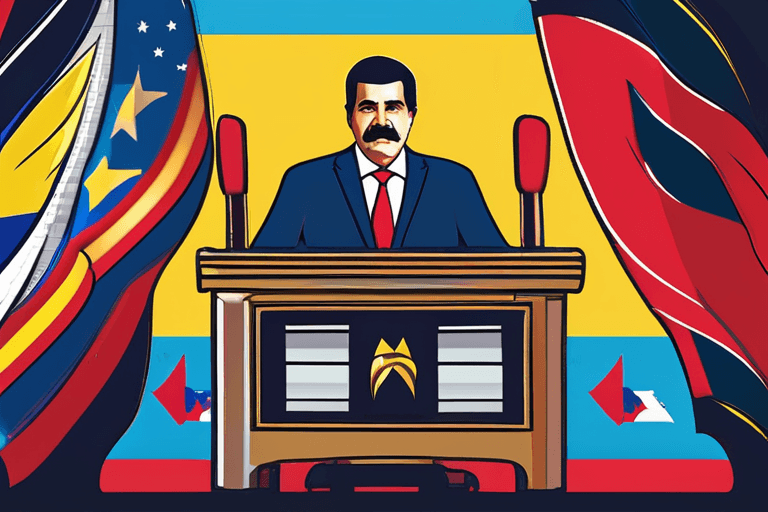
U.S. President Donald Trump stated on Saturday that the U.S. is going to "run" Venezuela, raising questions about the future of the South American nation and the extent of U.S. involvement there. The statement, made during a press conference at his Mar-a-Lago Club in Florida, followed a Delta Force raid on a Venezuelan safe house that resulted in the removal of Nicolás Maduro from power.
The raid and subsequent declaration mark a significant escalation in U.S. policy toward Venezuela, which has been under increasing U.S. pressure for months. The U.S. has been building up military forces in the region, targeting alleged drug boats and seizing sanctioned oil tankers, actions that were previously viewed as potential precursors to a broader campaign aimed at regime change.
The phrase "run" Venezuela is open to interpretation, but analysts suggest it could imply a range of possibilities, from direct administration by a U.S.-backed interim government to a more indirect form of control through economic and political influence. The U.S. has not yet clarified the specific mechanisms by which it intends to "run" the country.
Venezuela has been in a state of political and economic crisis for years, marked by hyperinflation, shortages of basic goods, and widespread emigration. Maduro's government has been accused of human rights abuses and corruption, leading to international condemnation and sanctions from the U.S. and other countries. The U.S. has long maintained that Maduro's rule is illegitimate, recognizing opposition leader Juan Guaidó as the country's rightful president.
The situation in Venezuela has drawn international attention, with various countries and organizations offering different perspectives on the crisis. Some nations in Latin America and Europe have supported a negotiated solution, while others have backed the U.S. position. Russia and China, both of whom have close ties to the Maduro government, have criticized U.S. intervention in Venezuela's internal affairs.
The future of Venezuela remains uncertain. The removal of Maduro creates a power vacuum, and the U.S. faces the challenge of establishing a stable and legitimate government in a country with deep political divisions and a history of authoritarian rule. The international community is closely watching the situation, with concerns about the potential for further conflict and instability in the region. The immediate next steps are unclear, but likely involve the installation of an interim government and the beginning of a transition process, potentially including new elections.










Discussion
Join the conversation
Be the first to comment